
Engineering
How the suitcomes together.
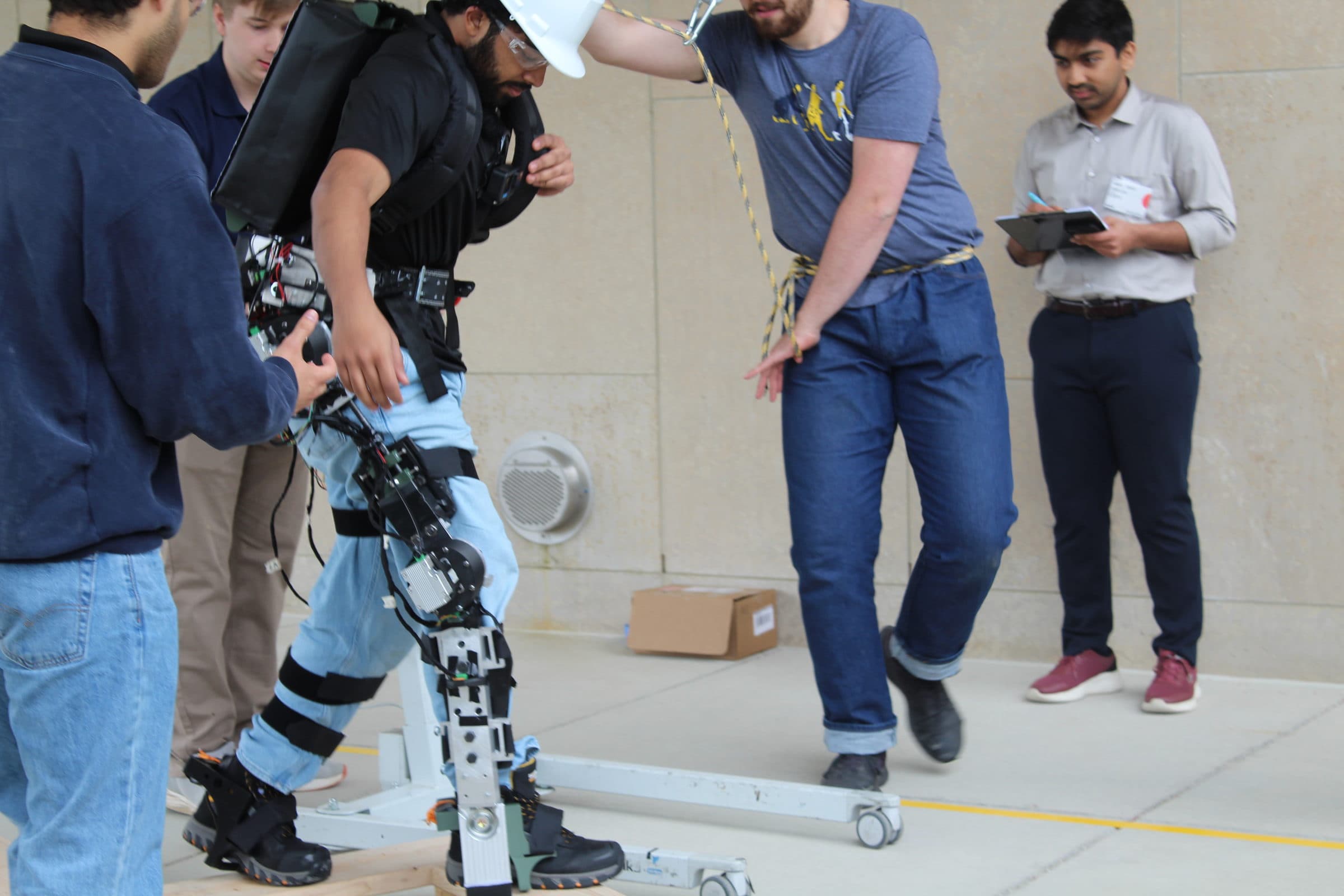
Four subteams, one machine. Every part is specified, machined and wired by students, then put on a person and tested until it holds.
The suit
Every part of this was made by a student.
The suit carries load through a rigid aluminium structure and adds torque at the hip and knee, so a pilot can climb stairs and clear obstacles wearing it. Pick a callout to see what each subsystem does and which subteam builds it.
Electrical
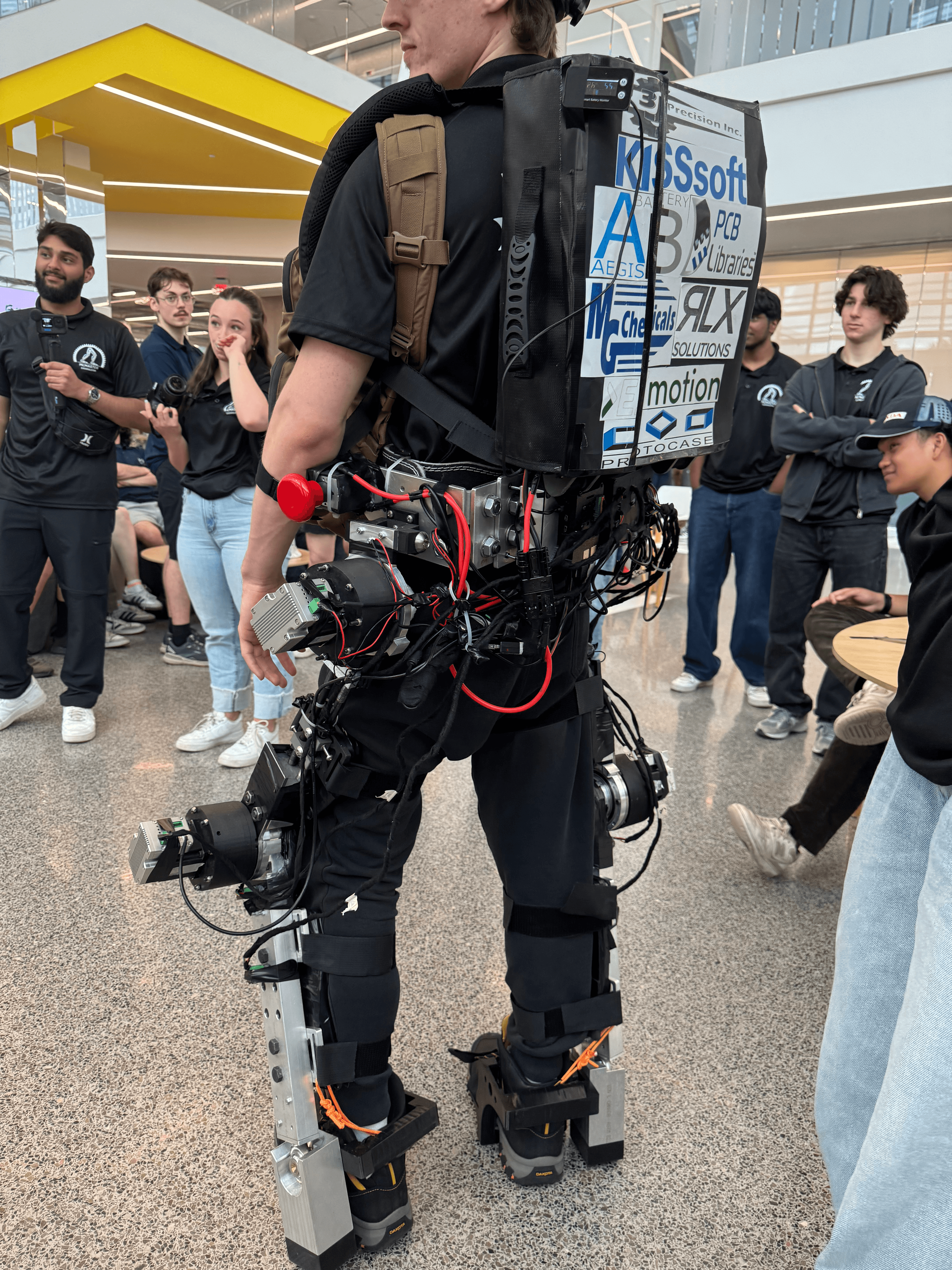
Control pack
Back-mounted enclosure carrying the battery, power distribution and controller boards. It also carries our sponsors' logos to every event we run.
- Type
- Powered lower-limb exoskeleton
- Actuated joints
- Hip and kneeBilateral
- Structure
- Machined aluminium
- Build cycle
- One academic yearFrom blank CAD to competition
- Pilot control
- Onboard, pilot-initiated
- Safety
- Hardware e-stop + rapid doff
Subsystems
What's on the machine
Every one of these is specified, sourced and integrated by a student subteam. Nothing here arrives as a kit.
Structure
- Machined aluminium frame
- Hip joint assembly
- Knee joint assembly
- Harness & fit system
- Pilot boot interface
Actuation & power
- Brushless joint actuators
- Motor drivers
- Battery pack
- Power distribution board
- Hardware emergency stop
Sensing & control
- Embedded motor controllers
- Real-time control loop
- IMU sensing
- Load sensing
- Gait state machine
Toolchain
- SolidWorks
- KISSsoft
- FEA
- Custom PCB design
- Embedded C/C++
- Python
Subteams
Who owns what
Four groups, each responsible for a slice of the machine end to end.
Process
One season, blank CAD to competition.
The team rebuilds from scratch every year. Here is what that actually looks like.
- 01 · Fall
Design
Requirements from the ACE rulebook, concept selection, then CAD and circuit design. Nothing gets cut until the analysis says it holds.
- 02 · Winter
Build
Machining, PCB assembly, wiring and firmware bring-up. Subsystems are tested standalone before they ever go on a person.
- 03 · Late winter
Integrate & test
The suit comes together, a pilot straps in, and the safety team signs off on every test session.
- 04 · Spring
Compete
Design review, safety inspection, then stairs and the obstacle course at ACE.